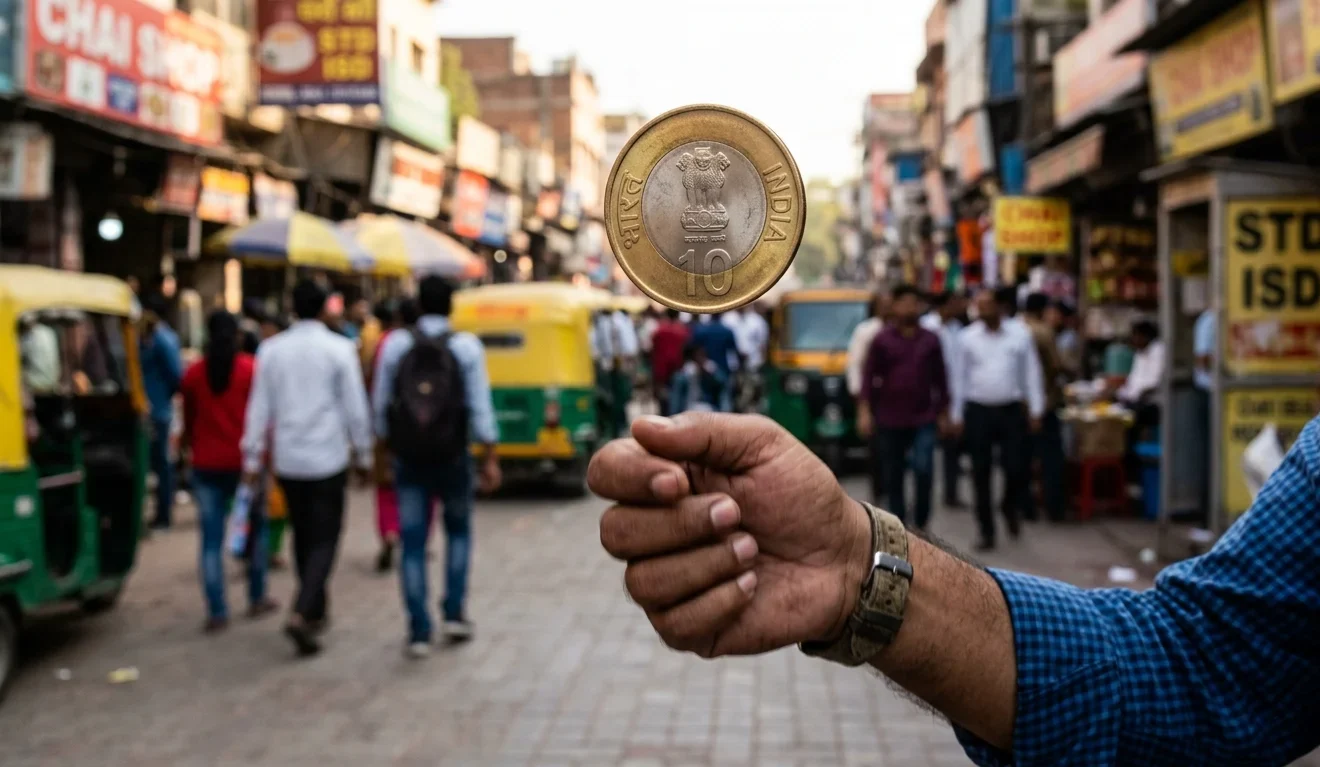
Flip an Indian Coin Online –Toss + History & Probability
WHAT IS A COIN FLIP?
A coin flip, also known as tossing a coin, is a fundamental method of decision-making. By throwing a coin into the air and observing whether Heads or Tails lands facing up, individuals introduce a mathematical element of 50/50 chance to ensure absolute fairness in games, sports, and disputes.
History of Coin Tossing
Coin flipping dates back thousands of years. The Romans called it "navia aut caput" (ship or head), referring to the common imagery found on their currency. This impartial method quickly spread across Europe and Asia as a standard for gambling and settling high-stakes legal disagreements.
Modern Uses in India
In India, the coin toss is culturally synonymous with Cricket. Before every match, the toss determines which captain chooses to bat or bowl, often dictated by ground conditions. Beyond sports, Indian coin designs—featuring national emblems—give the toss a layer of symbolic and national significance.
Historical Fact: In professional matches, the coin must complete several full rotations to be considered a valid, impartial result.
Experience Absolute Randomness
FLIP A COIN NOWCOIN FLIPS IN INDIA
In India, the coin flip is more than just a random choice; it is a cultural staple for impartiality. Whether in high-stakes professional sports or daily social interactions, the toss provides a transparent, conflict-free resolution to any binary choice.
Everyday Decisions
From choosing who pays for chai to deciding the first turn in a casual game of carrom, the coin flip acts as a neutral arbiter. It removes personal bias and prevents social friction in small, everyday dilemmas.
Games & Disputes
Historically, "tossing" has been a standard method to resolve informal competition ties or friendly arguments. It serves as a universal symbol of fairness, ensuring that chance—rather than influence—dictates the outcome.
The Cricket Match Ritual
The most iconic use of the coin flip in India is at the center of the cricket pitch. Before every match, the toss determines the strategic advantage of batting or bowling first. Given India's varying pitch conditions and humidity, this 50/50 ritual is often the most discussed moment before the first ball is bowled.
Strategic Insight: In Indian cricket, winning the toss often allows captains to account for the "dew factor," which can significantly impact bowling performance in evening matches.
INDIAN COIN DESIGN
Indian coins are meticulously crafted to serve as both functional currency and a reflection of national heritage. Every coin features distinct "Heads" and "Tails" sides, each embedded with deep cultural and political symbolism.
Heads: The Ashoka Emblem
The "Heads" side of modern Indian coins features the Lion Capital of Ashoka, India’s national emblem. This iconic symbol displays four Asiatic lions standing back-to-back, representing power, courage, pride, and confidence—reinforcing the nation's sovereignty and rich historical foundation.
Tails: Denomination & Symbol
The "Tails" side focuses on utility and identity. It clearly displays the ₹ (Rupee) symbol alongside the coin’s numerical denomination. Many coins also feature intricate motifs ranging from agricultural stalks of grain to commemorative portraits of national leaders, highlighting India's diverse cultural landscape.
Symbolic Note: Below the Ashoka emblem, the motto "Satyameva Jayate" (Truth Alone Triumphs) is inscribed in Devanagari script on larger denominations, serving as a constant reminder of national values.
PROBABILITY & FAIRNESS
The coin flip is the universal benchmark for random chance. Whether settling a playground dispute or determining the kickoff in a World Cup final, the integrity of the toss relies on the mathematical certainty of its binary nature.
The 50/50 Chance Explained
Because a standard coin possesses only two possible outcomes—Heads or Tails—the theoretical probability for either side is exactly 50%. In a fair environment, where the coin is balanced and the toss is sufficiently high, this equal distribution ensures that no participant holds an unfair advantage.
Digital vs. Physical Flips
Physical flips are governed by Newtonian physics: force, air resistance, and the surface of impact. In contrast, Digital Coin Flips utilize Pseudo-Random Number Generators (PRNGs). While physical flips can be slightly influenced by the "starting side" up, high-quality digital algorithms provide a mathematically perfect distribution of results.
Mathematical Fact: According to the Law of Large Numbers, while a few flips may show a streak, performing thousands of flips will always result in a ratio that approaches exactly 1:1.
COIN FLIP RULES
The Cricket Toss Protocol
- Pre-Match Meeting Exactly 30 minutes before the first ball, the team captains meet at the center of the pitch with the Match Referee.
- The Execution The home team captain usually tosses the coin while the visiting captain calls "Heads" or "Tails" while the coin is in the air.
- The Decision The winning captain must immediately inform the referee and the opposing captain of their choice to bat or bowl first.
Strategic Impact: The toss decision is influenced by the "pitch report," weather forecasts, and light conditions—factors that can drastically change the game's momentum in India.
Traditional Games & Disputes
- Turn Determination In board games like Carrom or card games, a quick toss determines who begins the play, ensuring no inherent "first-move" bias.
- Playground Fairness In physically demanding sports like Kabaddi or Gilli-Danda, the toss decides which side starts the raid or field positions.
- Conflict Resolution For informal disputes among friends, the coin serves as a neutral third party, providing a definitive end to any stalemate.
DIGITAL FLIP BENEFITS
Absolute Convenience
- Instant Decisions Toss a coin instantly without searching for physical change, ideal for home, office, or fast-paced online gaming.
- Remote Fairness Ensure total impartiality during virtual events or remote competitions where participants cannot be physically present.
- Travel Friendly Maintain the ability to resolve choices during travel or digital sessions without the need to carry physical currency.
Educational Utility
- Teaching Probability A perfect interactive tool for classrooms to demonstrate the 50/50 chance principle and the nature of randomness.
- Interactive Learning Students can run high-speed experiments comparing digital algorithms against physical real-world results.
Cultural Integration: High-quality Indian flip tools simulate the Ashoka Emblem and ₹ Rupee symbol, preserving national heritage in a modern digital format.
Cultural Connection
- Preserving Tradition Whether for a cricket toss or a family decision, these tools maintain the familiar ritual of the Indian coin flip.
- Modern Format Transitioning traditional practices into 2026's digital-first environment ensures cultural habits remain relevant.
COIN FLIP FAQS
Is the Online Flip Truly Random?
Yes, most professional online coin flip tools utilize Random Number Algorithms to simulate a fair 50/50 chance. While results are mathematically unbiased, the integrity depends on the platform’s programming. Trusted tools provide results functionally identical to physical tosses.
Can I Flip Multiple Coins?
Many digital tools offer the ability to toss multiple coins simultaneously. This feature is particularly useful for:
- Games or board games that require a multi-coin result.
- Classroom probability experiments and statistical teaching.
- Complex decisions where each coin represents a unique path or choice.
Physical vs. Digital: Which Is Better?
The choice depends on the setting and your specific needs:
Physical Coins:
Best for tradition and tactile rituals, such as a formal cricket toss or family game night.
Digital Flips:
Ideal for convenience, remote decision-making, and high-speed statistical analysis when a physical coin is unavailable.